MODULE 7: AWARENESS
OUTCOME: The disciple is aware of God’s presence in all things and is eager to engage with him.
In the 16th century, St. Teresa of Avila wrote, “Union is as if in a room there were two large windows through which the light streamed in it enters in different places but it all becomes one.” This vision of two large sources of light pouring into the same space is an illustration of what union with God means. It is to exist in such a way that it becomes unclear where my will ends and God’s will begins, because my will is aligned with His. To get to this point, we must become aware of God’s active presence all around us, all the time. This is the culmination of union with God.
This module will help us understand that God is moving all around us, and invites us to join Him there. St. Ignatius Of Loyola once said, “discernment is finding God in all things so that we might love and serve God in all.” Our job is to develop eyes to see God in all things and hearts that are courageous and eager to serve God in all things. This is the discipline of awareness.
What Is the Discipline of Awareness?
God is not only present in church services, quiet times and dramatic answers to prayer. He is at work in our commute, our kitchen, our workplace, our conversations and even our frustrations. The discipline of awareness trains the disciple to notice that presence and respond to it. As Jacob said after his dream at Bethel, "Surely the Lord is in this place, and I was not aware of it" (Genesis 28:16).
This module builds on everything the Pathway has covered so far. Prayer taught us to talk with God; Scripture taught us his story; guidance taught us to see his hand in our past. Awareness brings all of it into the present moment, so that the disciple learns to see everything through Jesus — the good and the bad, the significant and the ordinary.
The Examen: A Daily Prayer of Awareness
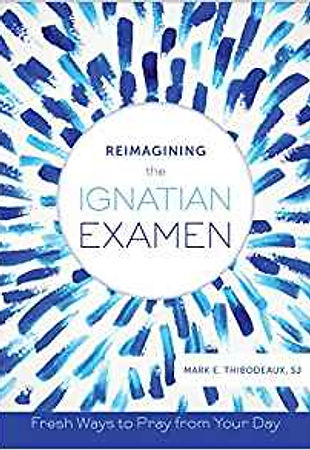
The central practice in Module 7 is the Examen, a simple daily prayer developed by St. Ignatius of Loyola. It usually takes ten to fifteen minutes at the end of the day:
Become aware of God’s presence. Pause, breathe and invite the Holy Spirit to guide your reflection.
Review the day with gratitude. Walk back through the day and notice the gifts, big and small.
Notice your emotions. Where did you feel close to God (consolation)? Where did you feel drawn away through hurt, anxiety or frustration (desolation)?
Choose one moment and pray from it. Thank God, confess, or ask for help, depending on what surfaced.
Look toward tomorrow. Ask for grace for what lies ahead.
Over time the Examen helps a disciple recognise patterns: where God tends to meet them, what triggers them, and how Christ was present even in painful moments. Restorative prayer, also introduced in this module, offers a way to bring those painful moments to Jesus for healing.
The Four Meetings of Module 7
Meeting 1: From Seen to Unseen — discuss Steve DeNeff’s Seen to Unseen sermon and begin paying attention to the unseen work of God around you.
Meeting 2: The Examen — discuss the Introduction to Awareness essay, debrief your first week of the Examen and learn restorative prayer.
Meeting 3: Finding God at Work — read Finding God in the Workplace and see how everyday work fits into God’s purposes.
Meeting 4: Work and Rest — discuss Finding God in the Workplace and Finding God in Rest, and practise awareness in both.
Finding God in Work and Rest
Many Christians quietly assume that "spiritual" life happens on Sundays and "real" life happens Monday to Friday. Module 7 challenges that split. Work was part of God’s good design before the Fall (Genesis 2:15), and Paul urges believers to work "with all your heart, as working for the Lord" (Colossians 3:23). Whether you lead a company, care for children, study, serve customers or are between jobs, your daily tasks can become places of worship and witness. Rest, too, is holy. Awareness helps us notice God in unhurried meals, in creation, in play and in sleep — not just in productivity.
Practical Ways to Grow in Awareness
Set a daily reminder to pause for sixty seconds and ask, "Where are you, Lord, right now?"
Keep a short gratitude list at the end of each day.
Pray briefly for the people you pass or meet.
Before a meeting or a difficult conversation, invite Jesus into it.
After a negative interaction, ask, "What was going on in me, and where was Christ?"
Tips for Disciplers
Awareness can feel abstract at first. Make it concrete: during your meeting, pause and ask together how God is present at the table you are sitting at, in the people around you and in the conversation itself. Share your own Examen notes. Be patient with disciples who struggle to "see" anything at first — noticing is a skill that grows with practice.
Key Scriptures on Awareness
Genesis 28:16 — "Surely the Lord is in this place."
Psalm 139:7–12 — there is nowhere we can go from God’s presence.
2 Corinthians 4:18 — fix your eyes on what is unseen.
Acts 17:27–28 — in him we live and move and have our being.
Colossians 3:17, 23 — do everything in the name of the Lord Jesus.
Frequently Asked Questions
Do I need to be Catholic to pray the Examen?
No. The Examen was developed by St. Ignatius, but Christians across many traditions use it because it is simple, biblical and deeply practical.
What comes next?
Once the disciple learns to notice God everywhere, they are ready to notice people too. Module 8: Hospitality turns awareness outward.
In this module: Meeting 1: Seen to Unseen · Meeting 2: The Examen · Meeting 3: Finding God at Work · Meeting 4: Work & Rest. All worksheets and videos: Module 7 resources. Previous module: Module 6: Generosity. Next module: Module 8: Hospitality. See all 11 modules.
For Further Study
Want to dive deeper into awareness? Check out the recommended
books and resources at the bottom of the page.
For Further Study
Want to dive deeper into awareness? Check out these recommended books and resources: